
For any business leader, the priority is always growth, stability, and the welfare of their team. Protecting physical assets and ensuring a safe working environment are foundational to these goals.
While locks and alarms have their place, the modern approach to business protection has evolved significantly. Today, a robust strategy relies on visibility and responsiveness.
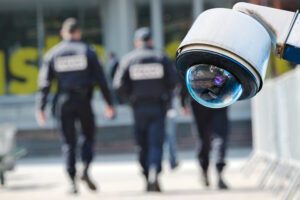
Closed-Circuit Television (CCTV) has long been a staple of commercial property management, but its role has shifted from a passive recording tool to a proactive business asset. However, technology rarely operates best in a vacuum. When advanced visual surveillance is paired with the intuition and physical presence of professional personnel, the result is a comprehensive safety net that allows businesses to thrive without distraction.
This article explores the positive impact of CCTV and how integrating it with manned guarding creates a sophisticated, efficient environment for staff and customers alike.
The Evolution of Visual Surveillance
The days of grainy, black-and-white footage stored on dusty tapes are long behind us. Modern CCTV systems offer high-definition clarity, remote accessibility, and intelligent analytics. For business owners, this means gaining a level of insight into their operations that was previously impossible.
Modern cameras can do far more than simply record activity. They can identify heat maps in retail stores to show where customers congregate, recognise license plates for automated barrier entry, and even detect smoke or fire hazards before they become critical.
This technological leap transforms CCTV from a “grudge purchase” into a value-adding tool. It provides managers with real-time data on operational efficiency and health and safety compliance. Yet, even the smartest camera requires human interpretation and reaction to be truly effective.
The Human Element: Why Personnel Still Matter
While cameras provide the “eyes” across a sprawling facility, they cannot replace the decision-making capabilities of a trained professional. This is why security guard services remain a vital component of corporate strategy.
A uniformed officer provides a welcoming presence for staff and visitors, offering a sense of reassurance that a camera lens simply cannot replicate. They are often the first point of contact, managing reception desks, handling deliveries, and assisting with customer queries. Their role is as much about customer service as it is about protection.
Furthermore, technology has limits regarding nuance. A camera might trigger an alert because a door has been forced open, but it cannot determine if it was a break-in or a staff member struggling with a faulty lock. A security officer can assess the situation, apply context, and make a judgment call immediately.
The Synergy: How Tech and Teams Work Together
The most effective security strategies are those that marry technology with human expertise. When CCTV and security guard services work hand in hand, they cover each other’s blind spots, creating a seamless layer of protection.
Targeted Response
In a large warehouse or office complex, a patrol guard cannot be everywhere at once. CCTV acts as a force multiplier. If a camera detects motion in a restricted zone or identifies a safety hazard, it can instantly alert the on-site team. The guard can then be directed to the exact location via radio, rather than wasting time patrolling empty corridors. This efficiency means that incidents—whether they are security breaches or maintenance issues—are resolved in minutes rather than hours.
False Alarm Reduction
Automated systems can sometimes be trigger-happy, alerting management to falling leaves or stray animals. By having a professional monitor the feeds, either on-site or remotely, businesses can verify an alarm before contacting emergency services. This prevents wasted resources and ensures that when police or fire services are called, it is for a genuine emergency.
Remote Monitoring and Virtual Guarding
For businesses that do not require a 24-hour physical presence, remote monitoring offers a fantastic middle ground. Here, off-site professionals utilise the business’s CCTV feeds to keep watch. If they spot suspicious activity, they can issue audio warnings via loudspeakers or dispatch mobile security services to the site. This integration ensures that the business is never truly left unattended, even outside of operating hours.
Enhancing Health, Safety, and Dispute Resolution
The impact of this hybrid approach extends well beyond theft prevention. A positive safety culture is a massive morale booster for employees, and CCTV plays a central role in maintaining it.
Reviewing footage allows management to identify potential trip hazards, assess whether safety protocols are being followed in loading bays, and ensure that lone workers are safe. When staff know that their environment is actively monitored for their well-being, it fosters a sense of care and value.
Additionally, in customer-facing sectors like retail or hospitality, disputes can occasionally arise. High-quality video and audio recording protect both staff and the business by providing an objective account of events. This transparency helps resolve complaints quickly and fairly, often de-escalating situations before they impact the company’s reputation.
The Business Case for Integrated Solutions
Ultimately, investing in comprehensive security services that combine electronic eyes with professional boots on the ground is an investment in business continuity.
The cost of disruption—whether through vandalism, inventory loss, or safety incidents—often far outweighs the investment in a proper protection strategy. Moreover, many insurance providers view this dual approach favourably, offering reduced premiums to businesses that demonstrate a commitment to rigorous risk management.
By integrating these tools, business owners free themselves from the worry of “what if.” They can focus their energy on innovation, customer satisfaction, and expansion, safe in the knowledge that their premises, assets, and people are professionally cared for.
Securing a Resilient Future
The narrative around business security has changed. It is no longer about fortification and fear, but about oversight and intelligence. CCTV provides the data and the vision, while skilled personnel provide the judgment and the action.
Implementing a strategy that utilises both electronic surveillance and manned guarding ensures that a business is robust, responsive, and welcoming. It turns security from a background necessity into a proactive operational asset. For modern enterprises looking to secure their future, this harmonious blend of man and machine is undoubtedly the way forward.
Read more:
Visualising Success: How CCTV Enhances Business Security Strategy