
Matthew Cavedon
A recent conversation between two judges suggests that mercy should have more of a role in the criminal legal system than many people think. On November 19, Judges Stephanos Bibas and Richard Sullivan met at the Catholic Information Center in Washington, DC, to discuss “Mercy, Retribution, and the Sentencing Judge.” The talk was sponsored by The Center for The Constitution and the Catholic Intellectual Tradition. Both men spoke from their experiences as people of faith—Sullivan is Catholic, while Bibas is an Orthodox deacon—and former federal prosecutors. Additionally, before rising to the bench, Judge Bibas’s scholarship focused on sentencing and plea bargaining.
Their learned insights recommend the benefits of more informed and empowered juries.
Judge Bibas provided a brief history of mercy and justice, discussing ancient Greece’s emphasis on prudence and the early Christian humility that “there but for the grace of God go I.” He blames Saint Anselm’s theology, which holds that human sins demand strict punishment (a debt paid by Christ’s atonement on the Cross), for driving a wedge between justice and mercy. Enlightenment thinkers added their own reasons for finalizing the divorce between the two: For consequentialists, mercy furthers the good of the accused at the expense of society. For deontologists, justice is made of unbending rules.
Colonial Americans departed from these ideas in favor of an approach more informed by their understandings of Christianity, and they sought to restore offenders to community life. In England, executions were frequent and celebrated enthusiastically, whereas on our side of the sea, very few death sentences were imposed and even fewer executions carried out. Though the law called for death for every felony, juries and judges exercised “pious perjury,” convicting people only of lesser offenses and often recommending commutations.
Yet over the 20th century, this gave way to utilitarian crime control, pursued through widespread plea bargaining. Where juries once morally evaluated cases through public trials, sentencing is now tightly controlled and even “mechanistic.” Legislatures impose mandatory minimum sentences, and many governors can grant clemency only after following specified procedures.
Mercy is left to prosecutors as they negotiate guilty pleas. Too often, they prove heartless. Aaron Swartz, for instance, took his own life after prosecutors threatened him with 35 years in prison for illegally downloading scholarly articles and turned down his offer to plead guilty in exchange for no prison time. The combination of mandatory harsh sentencing and unchecked prosecutorial power can result in other gross injustices, too, such as life sentences for non-violent firearm possession.
Despite horrors like these, Judge Bibas noted that not every aspect of the historical shift away from sentencing discretion is bad. Indeed, judges giving objective reasons for sentences and other courts reviewing their decisions increase transparency and rationality. Yet the current approach invites too little public deliberation about the morality of punishments. It also downplays the possibility of people changing while imprisoned.
Judge Bibas proposed a few improvements, criticizing prosecutors who try to keep jurors from learning that murder victims were opposed to the death penalty. He also cited empirical studies showing that people generally think forgiveness is relevant to sentencing.
For his part, Judge Sullivan argued that limits on mercy are appropriate in a system of divided powers. Eighteenth-century jurist William Blackstone thought it was the job of the executive, not the judge, to show clemency, and Judge Sullivan thinks the president’s pardon power reflects this. Congress has constitutional control over all federal courts other than the Supreme Court, and its directives as to sentencing factors bind judges.
Both judges highlight important lessons. Judge Sullivan noted the importance of predictability and fairness. Judge Bibas agreed that “idiosyncratic” sentencing is bad. But he is also right that sentencing should be shaped by the conscience of the community and that theories of justice with no room for mercy fall short of our best traditions and intuitions.
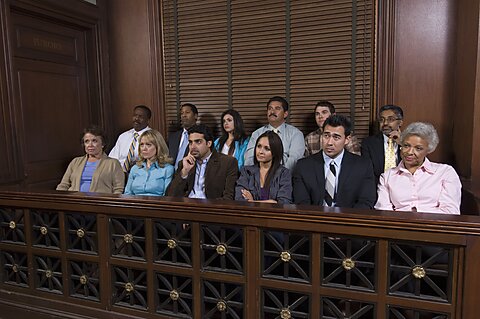
Recovering the proper role of juries would help restore mercy’s place in justice. The work of evaluating particular cases conscientiously was historically the responsibility of juries. Regrettably, though, Judge Bibas’s retelling of the history of mercy’s displacement is accurate. My colleague Mike Fox has detailed ways trials have been redesigned to make juries harmless:
If a prospective juror expresses sympathy for the historic power of the jury to acquit based on conscience, they are swiftly struck….
Judges routinely state, “Your role is to be a judge of the facts.” This may sound benign, but it … strips the community of its moral agency, reducing jurors to bureaucratic fact-checkers.
The deception deepens when jurors are told they cannot consider punishment. By keeping the jury blind to the potential sentence … the system allows them to rationalize a conviction, assuming the punishment will be lenient even when mandatory minimums ensure it will be draconian.
A jury that is curated by prosecutors, buffeted by judges, and kept ignorant of consequences cannot be the doer of justice and the reservoir of mercy. It is reduced to being a mere functionary, instead of embodying government by the people.
That degradation ignores what colonial Americans understood: mechanistic justice is no justice at all. Justice without mercy is incomplete, and the community’s conscience, carried by 12 ordinary jurors, deserves a central place in sentencing.